How to implement and scale AI across your hotel commercial team

Hotel commercial teams can start putting AI to work by focusing on a couple of daily or weekly routines they already perform. By connecting AI to the systems and data behind those activities, they can begin turning recurring work into consistent workflows for the entire team.
Scaling means repeating that pattern across all commercial teams and properties, with the people configuring the AI working alongside the people using it.
This guide covers five practical steps for moving from initial use cases to AI workflows and connecting the necessary systems, to building trust and expanding AI use across the organization.
Key takeaways
Start with recurring commercial work. Choose a few use cases, connect the relevant systems and turn repeat tasks into consistent workflows.
AI use has spread faster than its impact. Non-use fell from 37% to 17% between 2024 and 2026.
Connecting AI to existing systems remains a major challenge. Integration challenges (41%) and unclear use cases (39%) hold teams back more than budget (28%).
Working with specialists gets AI to scale faster. Ernest Crews take hotel groups from kickoff to production in 30 to 60 days.
What blocks AI from improving results in hotel commercial teams?
As AI has woven its way into the professional lives of almost every industry, studies generally uncover that even though more hoteliers are using AI in their day to day, few have set it up correctly to change how commercial decisions get made.
In Lighthouse’s Commercial Leader Survey 2026, 761 hospitality leaders across six regions rated AI’s current impact on their commercial strategy at 3.02 out of 5, against 3.06 in 2024. Over the same period, the share of respondents not using AI at all fell from 37% to 17%.
Among leaders who rate that impact low, integration challenges are the biggest barrier, cited by 41%, ahead of no clear use case (39%) and difficulty trusting AI outputs (34%). At the same time, two-thirds expect AI to have a major impact on their business, yet only 10% feel fully prepared for it.
Why do so few feel ready when the technology is this capable? It comes back to integration, in the team as much as in the tech stack.
In many hotel groups, AI arrives as a login for each person, who is left to work out what to use it for, with no shared framework, no agreed goals and no connection to the systems the commercial team already runs on. People get faster at certain tasks of their own but the team’s decisions carry on as before.
Other industries report the same problem. In McKinsey's State of AI 2026 survey, 80% of respondents say AI has made them more productive, yet the share reporting any EBIT impact from it held at 37%, essentially unchanged from 2025.
In Wharton's 2026 AI adoption study of large US companies, 65% of managers and executives said people and processes hold their teams back more than the technology does.
So what’s the common thread here? The Lighthouse survey, McKinsey and Wharton describe the same issue. AI is spreading person by person and those using it feel the benefit in their day to day, but business results can stay flat because teams are still working the way they did before AI arrived with no clear direction for integration into business goals.
That means deciding who owns it and what it’s for, connecting the systems it needs, putting repeat work on a schedule, building trust in its output and getting the whole commercial team working from the same numbers. The five steps below set it out in order.

Five steps to adopt and scale AI in your hotel commercial team
The process starts with choosing the right use cases, then connecting the necessary systems, establishing routines, testing recommendations and expanding AI use across the commercial team.
1. Name an owner and pick three to five use cases
Give the rollout an owner with the time to run it, backed by an executive sponsor and a small working team.
Wharton found that 58% of managers and executives at companies with a dedicated chief AI officer reported strongly positive returns from AI, against 24% where the role was added to another executive's job.
Then choose three to five pieces of repeat work that cost your team real hours every week, such as the pre-call performance pack, why pace is behind on a date that should be strong or the monthly owner update.
Start where hoteliers already use AI most. In the Lighthouse survey, the top uses are data analytics (55%), market analysis (54%) and pricing decisions (47%).
2. Connect the right systems before you add more users
An AI that can't read your PMS, RMS and market data works from exports, which go stale and send people back to their spreadsheets.
Connect the systems your first use cases depend on before you widen access, and tie each connection to a question it makes answerable.
Groups with mixed PMS setups should expect this step to take the most effort.
3. Turn repeat work into routines and alerts
When a question comes up every week, put it on a schedule. A general manager can get five need-to-know points at 8am, and a revenue manager a ranked list every Wednesday of dates pacing 20% or more behind over the next 120 days.
Add alerts for moments that need a response, such as demand jumping more than 20% in a day. This is where AI engrains itself in your working week, because the work arrives without anyone asking.
4. Build trust from insight to recommendations to action
A third of the leaders who rate AI's impact low find its outputs hard to trust. Trust grows when people can check the work, so choose an AI platform that shows where its answers came from.
Initially your team can compare recommendations against its own calls, until they feel comfortable.
Hand over routine actions only after that, inside guardrails your team sets, with every action logged and reversible.
Decisions that move revenue stay with a person, because the AI isn't accountable for a bad call. Its job is to give that person the best information to decide.
“Your morning routine is a good place to start. Every revenue manager has one that sets up the week ahead. The reports are the same every week and the data sits in different systems, so a good part of the morning goes on collecting and analysing data before you get time to think about decision-making. This can be delegated to AI. When you sit down, pace, pickup, forecast and market position are already pulled together with recommended actions.
It’s a sensible first job because the risk is low and your team knows these numbers well enough to check them against the sources to make sure it all adds up, building trust.”
Juanjo Rodriguez, Chief AI Officer at Lighthouse
5. Align the whole commercial team around the same answers
Only 20% of the leaders Lighthouse surveyed describe their sales, marketing, revenue management and distribution teams as fully integrated. Add AI to teams working in silos and each one gets faster at producing its own version of the numbers, so give every function the same data and answers.
Then plan for roles to grow. As AI changes staffing needs in hotel commercial teams, the Lighthouse survey shows leaders are hiring for cross-utilized talent (42%) and expect each revenue manager to cover more properties (42%), while just 4% have cut headcount because of AI.

Why a forward-deployed team gets AI to scale faster at your hotel
Each step takes time a commercial team rarely has spare, from shortlisting use cases and maintaining connections to sitting with users long enough to learn what works. When that lands on people already running hotels, rollouts stall after the pilot.
"A tech platform only creates value when it is actually used in production, every day, by real teams," said Ivo Minjauw, Chief Product Officer at Lighthouse, who leads the Crews program.
Forward-deployed teams close that gap by doing the configuration inside your organization, and it's the model behind Ernest Crews. A small Lighthouse team embeds with a hotel group to fit Ernest.
Ernest is Lighthouse’s AI teammate for hotel commercial teams, now generally available to hotel groups, chains and management companies. Revenue, sales, marketing and distribution teams ask him questions in plain language. He answers from their wealth of internal data alongside Lighthouse’s market data, with sources cited.
He works through commercial skills built by Lighthouse’s revenue managers, connects to more than 500 hospitality systems and handles recurring work through scheduled routines and alerts. Today he recommends and your team decides.
On the Crews team a Captain owns the outcome, a Commercial Strategist decides which skills to build first, builders ship custom skills and integrations each week and a Field Researcher sits with your users to feed what works back into the build.
Each Crew moves from intake and strategy to three to five co-designed use cases, then the build and live deployment with a daily feedback loop. Guardrails go in from day one, and groups reach production in 30 to 60 days.
Viceroy Hotel Group was among the first to work with a Crew. "What made the difference was the time the Crew spent with our people, understanding what they needed and how they actually work," said Scott Muety, VP of Revenue & Distribution.
Some groups do start with Ernest on their own and let him learn their business as they work. For groups that want AI running in every commercial team across the portfolio within weeks, an embedded Crew is built for that.
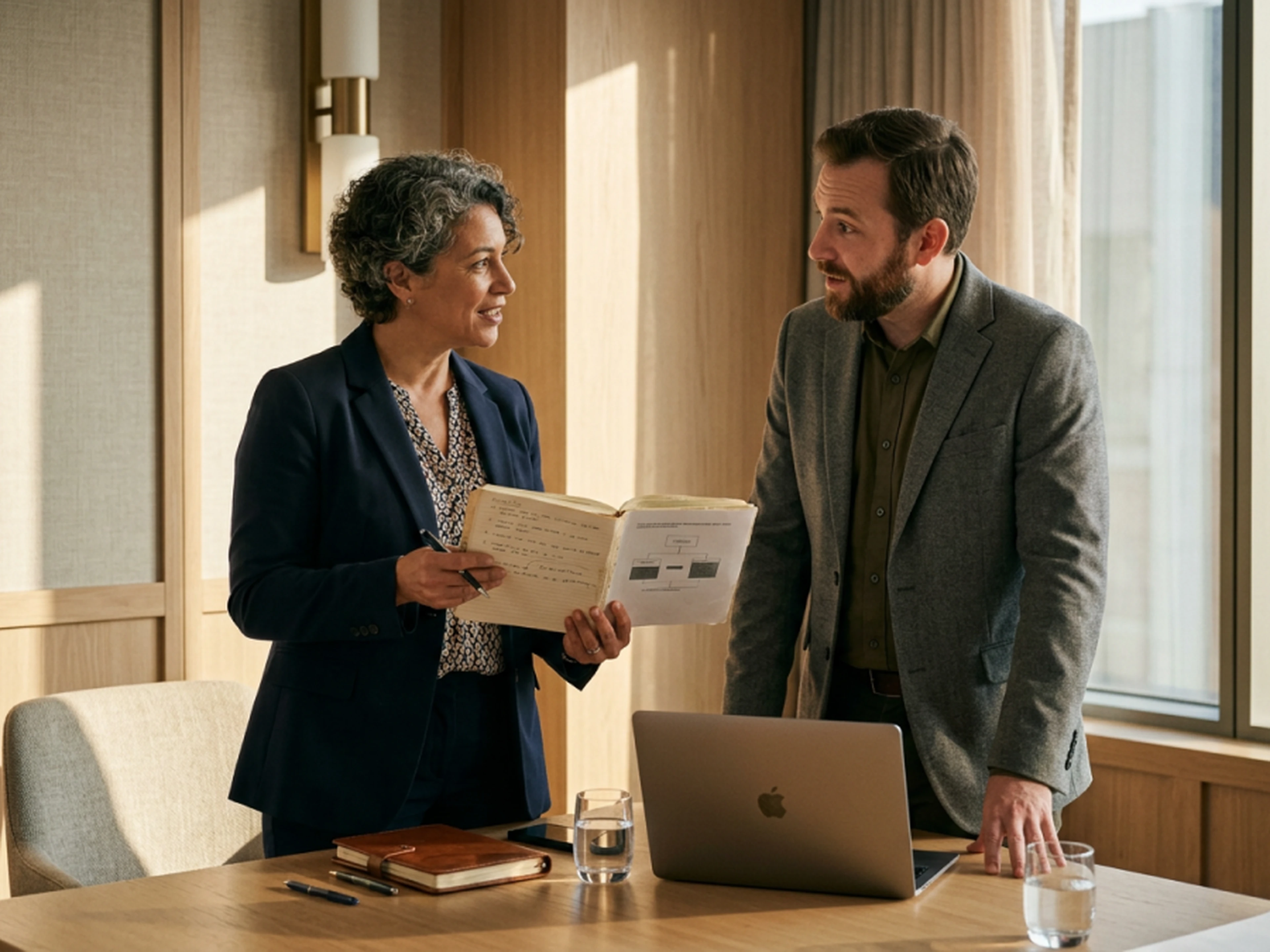
Making AI specific to your hotel
Each step in this guide is a form of integration, connecting AI to your systems and building it into how your team works.
No two hotel groups do that the same way, because each runs on its own mix of systems, processes and priorities. But that’s what Ernest Crews are there for.
Ernest arrives with commercial skills built by Lighthouse’s revenue managers and connections into the hotel tech stack. A Crew fits those skills, connectors, routines and guardrails to how your organization actually operates, so AI becomes part of how your teams work every day.
Ernest makes AI specific to hospitality, and a Crew makes it specific to your business.
Frequently asked questions
How long does it take to roll out AI across a hotel commercial team?
It depends on how many systems need connecting and how many use cases you start with. With an embedded team configuring the AI alongside your staff, hotel groups can reach production in 30 to 60 days, the timeframe Lighthouse's Ernest Crews work to.
What are the biggest barriers to AI adoption in hotels?
Lighthouse's Commercial Leader Survey 2026 found that leaders who rate AI's current impact low are held back most by integration challenges (41%), no clear use case (39%) and difficulty trusting outputs (34%). Budget ranks lower, at 28%.
How do you measure whether AI adoption is working?
Track growth outcomes alongside time saved. Wharton's 2026 AI adoption study found that 35% of departments measuring at least one growth outcome, such as net-new revenue or sales conversion, report strongly positive returns from AI, against 13% of those measuring efficiency alone. For a commercial team, pair hours saved on reporting with revenue and conversion results.
Who should lead an AI rollout across a hotel commercial team?
The rollout needs a named owner with time to manage the project, backed by an executive sponsor and a small working team. Together, they can agree on the first use cases, coordinate the systems and people involved, and oversee the introduction of AI across departments and properties.
What is a forward-deployed AI team?
A forward-deployed team is a small group of specialists from an AI provider who embed with a customer's staff to configure the technology around its systems, processes and priorities. Leading AI companies use the model inside complex organizations, and Lighthouse's Ernest Crews bring it to hotel commercial teams, from kickoff to production in 30 to 60 days.

Jonathan Gough

Jonathan Gough
Jonathan Gough is Content Team Lead at Lighthouse, spearheading all things content marketing. With a marketing career of over a decade, dedicated solely to travel, tourism and hospitality, Jonathan is passionate about leveraging Lighthouse’s technology to move the sector forward and provide lodging professionals with the tools they need to grow their business.