Hotel demand forecasting: why forward-looking data beats historical data

Last updated 20 October 2026
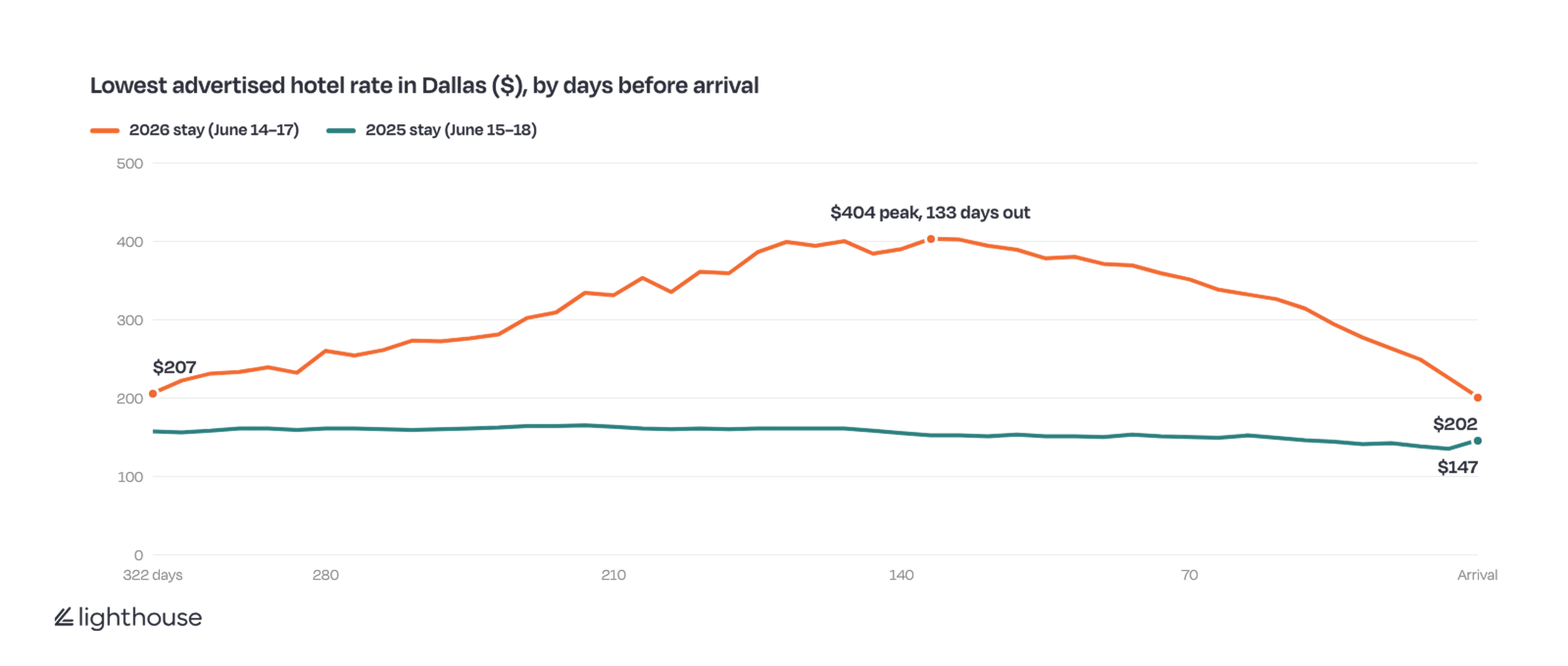
In the year leading up to June 15–18, 2025, the lowest advertised hotel rate in Dallas barely moved, staying between $136 and $171. Looking at those figures, you'd have little reason to expect anything unusual for the equivalent days in 2026.
Except Dallas was hosting World Cup matches that June, and travelers were already planning their trips months in advance.
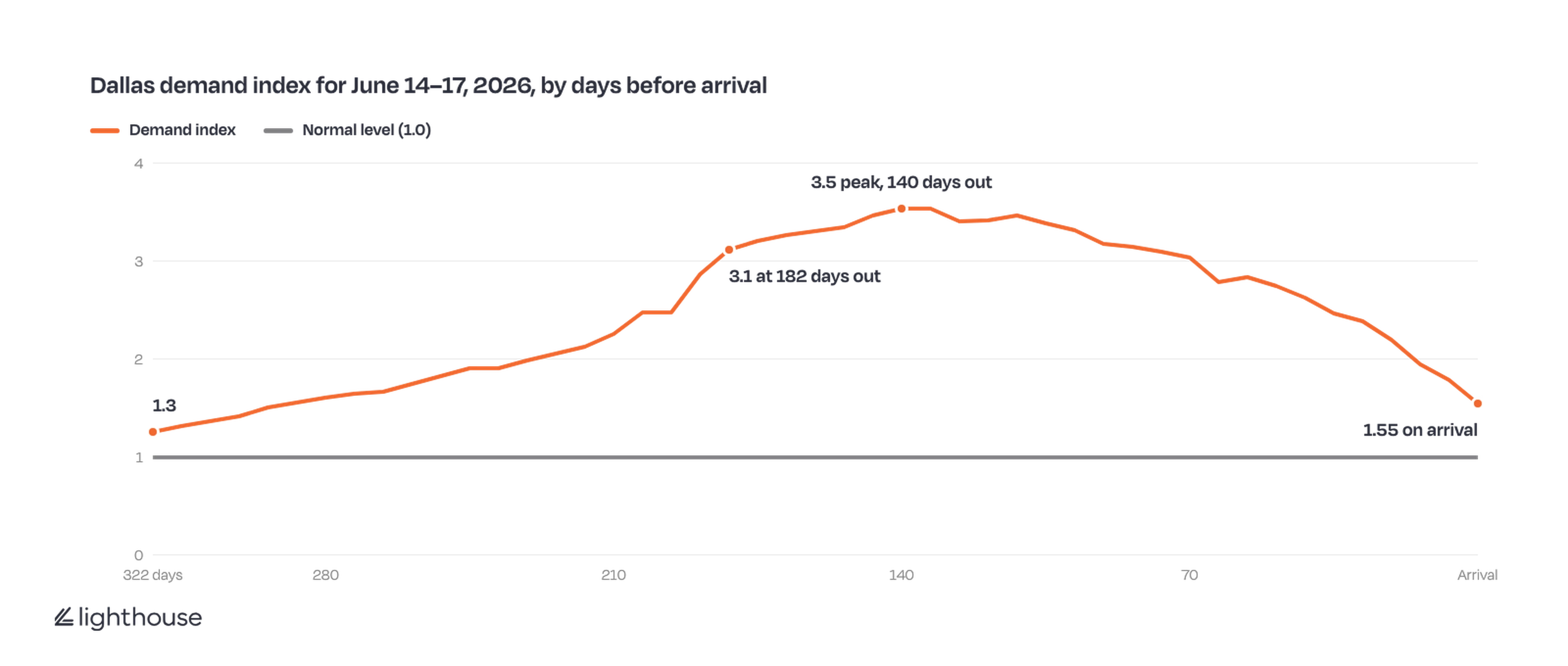
By mid-December 2025, Lighthouse demand data showed demand for those June dates was 3.1 times its normal level. That's six months before the first match, and well before much of that interest would translate into bookings.
A forecast based largely on the previous year's rates wouldn't have captured that early interest. Historical data is still useful, but hotels also need to see what travelers are searching for now, especially when an event is likely to make this year's demand look very different from last year's.
Key takeaways
Historical booking data is useful for understanding seasonality and establishing a baseline forecast, but it won't always capture changes in market demand early enough.
Forward-looking search data helps hotels see when travelers are showing interest in future stay dates, often months before they book.
For the 2026 World Cup, Lighthouse data showed demand for June stays in Dallas reaching 3.1 times normal levels by mid-December 2025.
Combining historical performance with forward-looking demand data gives commercial teams more information to work with when reviewing forecasts and making pricing decisions.
Lighthouse Pricing provides visibility into market demand up to 365 days ahead, helping hotels identify changes that may not yet be reflected in their own bookings.
Why does historical data fall short for hotel demand forecasting?
Most hotel demand forecasts start with historical booking data. Revenue management systems use statistical methods such as exponential smoothing and ARIMA to identify trends and seasonal patterns, then use those patterns to estimate future demand.
These methods are useful for budgeting and understanding how demand typically changes throughout the year. The trouble is that demand doesn't always follow familiar patterns. A new event, changing travel preferences or wider economic developments can all affect how many people want to visit a destination, often in ways that aren't reflected in previous years' data.
There's also a question of timing. Your Property Management System (PMS) shows you the bookings you've received, but it doesn't tell you how many travelers are currently searching for stays in your market. That interest can start building months before it translates into reservations.
By the time a change becomes obvious in your booking pace, you may have less room to adjust your pricing, distribution or marketing. You can still respond, of course, but you might have had more options if you'd spotted the change earlier.
The Dallas data shows how demand was building months before the World Cup. For June 14–17, 2026, Lighthouse's demand index was already at 1.3 in late July 2025, where 1.0 represents normal demand. By mid-November, it had reached 2.3, rising to 3.1 just a month later.
Hotel rates were increasing over the same period. The lowest advertised rate for those dates went from $207 in late July to $332 in mid-November, reaching around $400 by February 2026. That was 2.6 times the rate advertised for the same dates in 2025 at that point in the booking window.
This is why historical and forward-looking data are more useful together. Your booking history gives you a starting point, while current search activity and other demand signals help you understand whether the market is behaving as you'd expect, or whether something is changing.
| Historical data | Forward-looking data | |
|---|---|---|
| What it measures | Bookings that already happened | Searches and signals before booking |
| Best for | Baseline pace and seasonality | Events, shifts and new demand |
| Blind spot | Anything without precedent | Needs context from your own booking history |
| Time horizon | Past and on-the-books | Up to 365 days ahead in Lighthouse Pricing |
| Typical use | RMS baseline forecas | Checking and adjusting that baseline |
How does forward-looking data improve hotel demand forecasts?
Forward-looking data gives hotels a view of demand before travelers make a booking. By looking at search activity for future stay dates, commercial teams can see where interest is growing or slowing down, even when those changes haven't appeared in their own booking data.
Lighthouse Pricing shows market demand up to 365 days ahead, with data broken down by day, location and stay pattern. Revenue managers can use this alongside their existing forecasts to see whether expected demand matches what travelers are currently searching for.
That gives them more time to investigate changes in the market and decide whether their pricing, distribution or marketing plans need adjusting.
What is forward-looking search data in hotel revenue management?
Forward-looking search data comes from travelers researching future trips, before they've made a reservation. It includes hotel and flight searches across major booking channels, giving hotels an indication of where people are planning to travel and when.
Looking at this activity across a market helps hotels understand potential demand for future dates, sometimes up to a year in advance.
The data can show:
When travelers are planning to visit: The dates they're searching for, including periods when interest is increasing or falling.
How long they plan to stay: The length of stay travelers are considering.
Where they're traveling from: The source markets generating interest in a destination.
These details help commercial teams understand not just how much interest there is in a destination, but what that demand looks like and where it's coming from.

What data do you need for an accurate hotel demand forecast?
Historical bookings and forward-looking search data are useful starting points, but there are other factors that can affect demand. Competitor pricing, local events and wider economic conditions can all influence how many travelers visit a destination and what they're willing to pay.
Looking at these sources together gives commercial teams a better understanding of the market when reviewing their forecasts.
Forward-looking search data
Hotel and flight searches can reveal changes in travel interest before they appear in booking figures. By tracking searches across booking channels, hotels can see which dates are attracting attention, where travelers are coming from and how far ahead they're planning.
This is particularly useful when demand starts moving away from familiar seasonal patterns.
Competitive dynamics
Changes in competitor pricing and availability can provide useful context for your own forecast. If hotels across a market are raising rates or selling out for particular dates, it's worth investigating what's driving that activity.
It's also important to consider alternative accommodation, such as short-term rentals, which can affect the supply available to travelers.
External market factors
Local events, holidays and economic conditions can all influence hotel demand. A concert or sporting event might bring additional visitors to a destination, while changes in inflation, consumer confidence or travel costs can affect spending and booking decisions.
These factors won't always have a predictable effect, but monitoring them can help explain changes that historical booking patterns alone might not account for.

What are the advantages of external data integration?
Bringing external market data into your forecasting process helps you build a clearer picture of demand across your market. You can compare your own booking trends with changes in travel interest, competitor activity and other factors that might affect demand.
For commercial teams, this can help in a few ways:
More informed forecasting: Comparing your historical booking patterns with current market signals helps you identify dates when demand might be different from what you'd normally expect.
More time to adjust pricing: If search interest starts increasing months ahead of a stay date, revenue managers have more time to review rates, availability and booking restrictions before that demand reaches their books.
Better targeted marketing: Knowing when travelers are searching and which markets they're coming from can help marketing teams decide when to run campaigns, where to focus their budgets and which stay dates to promote.

How can Lighthouse Pricing help you use this data?
There's a lot of information to consider when forecasting demand, and tracking changes across different dates and markets manually takes time.
Lighthouse Pricing brings forward-looking demand data together in one place, showing how travel interest is changing across your market up to 365 days ahead. You can look at demand by date, location and stay pattern, and compare those signals with your existing forecast.
Ernest, Lighthouse's AI teammate for commercial teams, helps you make sense of that information alongside your own performance data. You can ask questions about upcoming dates, booking pace, competitor pricing and changes in market demand, with answers grounded in the data available to your team.
Ernest can also help identify dates that need attention, whether that's an unexpected increase in demand, a change in booking pace or a gap between your forecast and current performance. Teams can investigate those changes and set alerts to keep track of important dates as conditions develop, rather than having to check everything manually.
How do revenue and marketing teams use forward-looking demand data?
For revenue management teams
When search demand starts increasing for particular dates, revenue managers can review their pricing and availability before that interest translates into bookings. Depending on booking pace and market conditions, this might mean raising rates, restricting discounted inventory or reviewing promotions.
The same applies when demand looks weaker than expected. Spotting quieter periods early gives revenue managers more time to consider special offers, relax booking restrictions or introduce length-of-stay promotions to encourage bookings.
For marketing teams
Forward-looking data can help marketing teams decide where and when to focus their campaigns, based on the dates travelers are searching for and the markets they're searching from.
Campaign targeting: Use search trends to identify stay dates and source markets worth promoting, while travelers are still researching their trips.
Marketing spend: Review where demand is growing or slowing down and adjust campaign budgets and visibility across relevant booking channels accordingly.
How to combine historical and forward-looking data
Historical booking data is still a useful starting point for forecasting demand. It helps you understand seasonal patterns and booking pace, while forward-looking data lets you check those expectations against what travelers are currently searching for.
Start with your existing forecast and compare it with search demand for upcoming stay dates. If interest is higher or lower than expected, look at what might be driving the difference. Check your booking pace, competitor pricing and any events that could be influencing demand before deciding whether to adjust your rates, availability or marketing plans.
You won't always know exactly how demand will develop, but using both sources gives you more information to work with and more time to make decisions.
Frequently asked questions
Can forward-looking demand data improve an existing hotel forecast?
Yes, it can provide additional information that isn't always visible in historical booking patterns. Comparing search demand with your existing forecast can help identify dates worth reviewing, particularly when market conditions change. Whether it improves forecast accuracy depends on the quality of the data and how it's used.
How often should hotels review their demand forecasts?
Hotels should review their forecasts regularly, with more frequent checks for upcoming stay dates or periods when demand is changing quickly. Monitoring booking pace alongside forward-looking market signals can help revenue managers decide when their forecasts or pricing assumptions need another look.
Can hotels use forward-looking demand data without replacing their RMS?
Yes. Forward-looking data can complement an existing revenue management system by providing additional context about market demand. Commercial teams can use it to investigate differences between their forecasts and current travel interest before deciding whether adjustments are needed.

Jonathan Gough

Jonathan Gough
Jonathan Gough is Content Team Lead at Lighthouse, spearheading all things content marketing. With a marketing career of over a decade, dedicated solely to travel, tourism and hospitality, Jonathan is passionate about leveraging Lighthouse’s technology to move the sector forward and provide lodging professionals with the tools they need to grow their business.