COP31 Antalya creates a climate for high-end accommodation
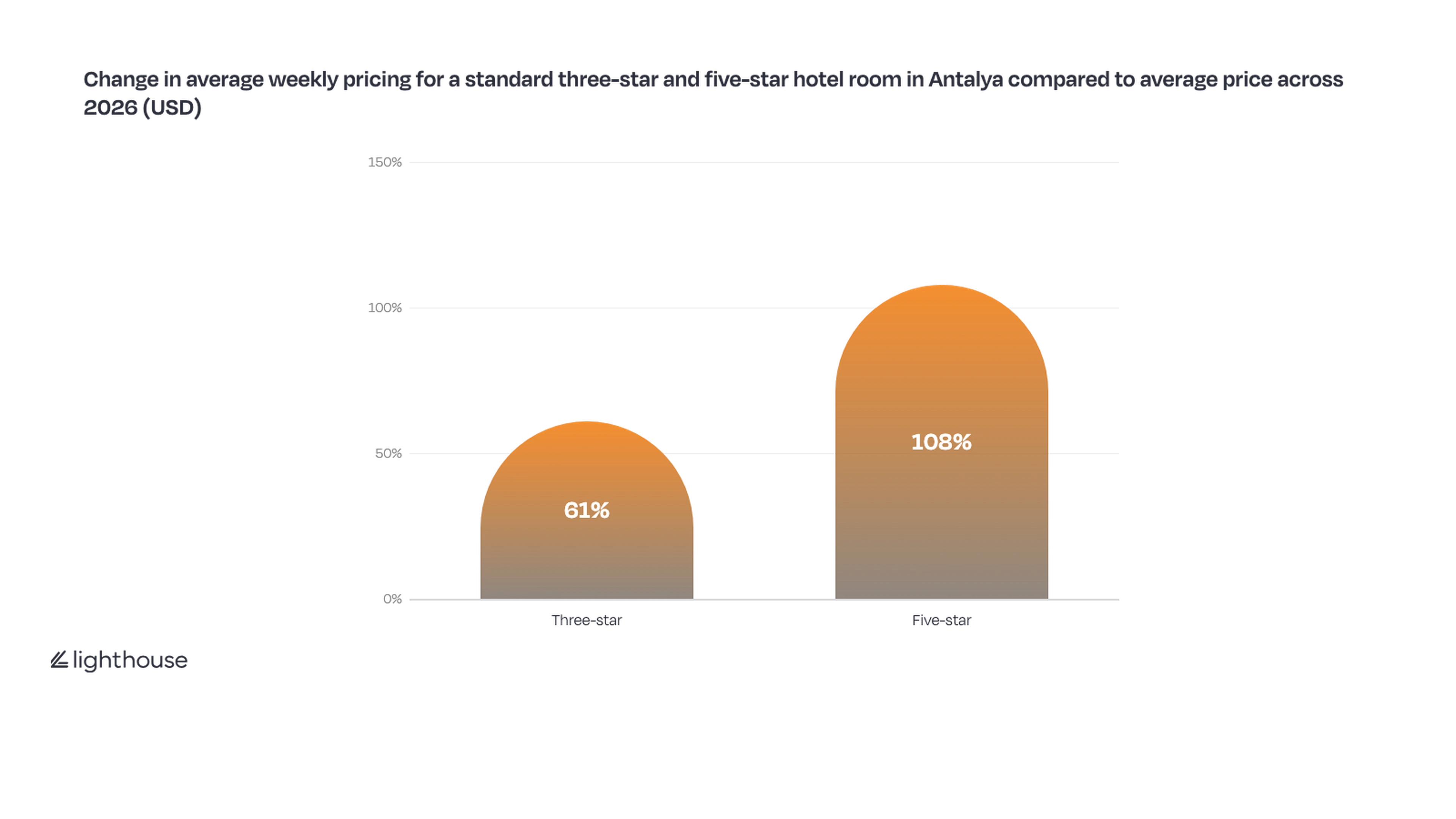
Five-star rates rise 108% above the annual average while short-term rentals see far less pricing impact
COP31 will bring a major influx of visitors to Antalya from November 9 to 20, but the impact on accommodation is far from uniform.
Lighthouse data shows hotel rates reaching their highest levels of the year during the conference. The strongest pricing response is at five-star properties, while three-star hotels and short-term rentals are seeing much smaller gains.
COP31 pushes Antalya hotel rates to an annual high
Hosting COP31 is a major undertaking for Antalya. More than 60,000 people are expected to attend, while the conference site spans more than one million square meters across two main zones.
Most delegates will have already gone through an official portal and chosen from around 250 partner hotels, but there is still plenty of demand around the event for hotels to capture.
With such a major injection of guests into the Antalya market and guaranteed occupancy for those 250 officially sanctioned hotels, there is naturally a huge boost in pricing for conference weeks.
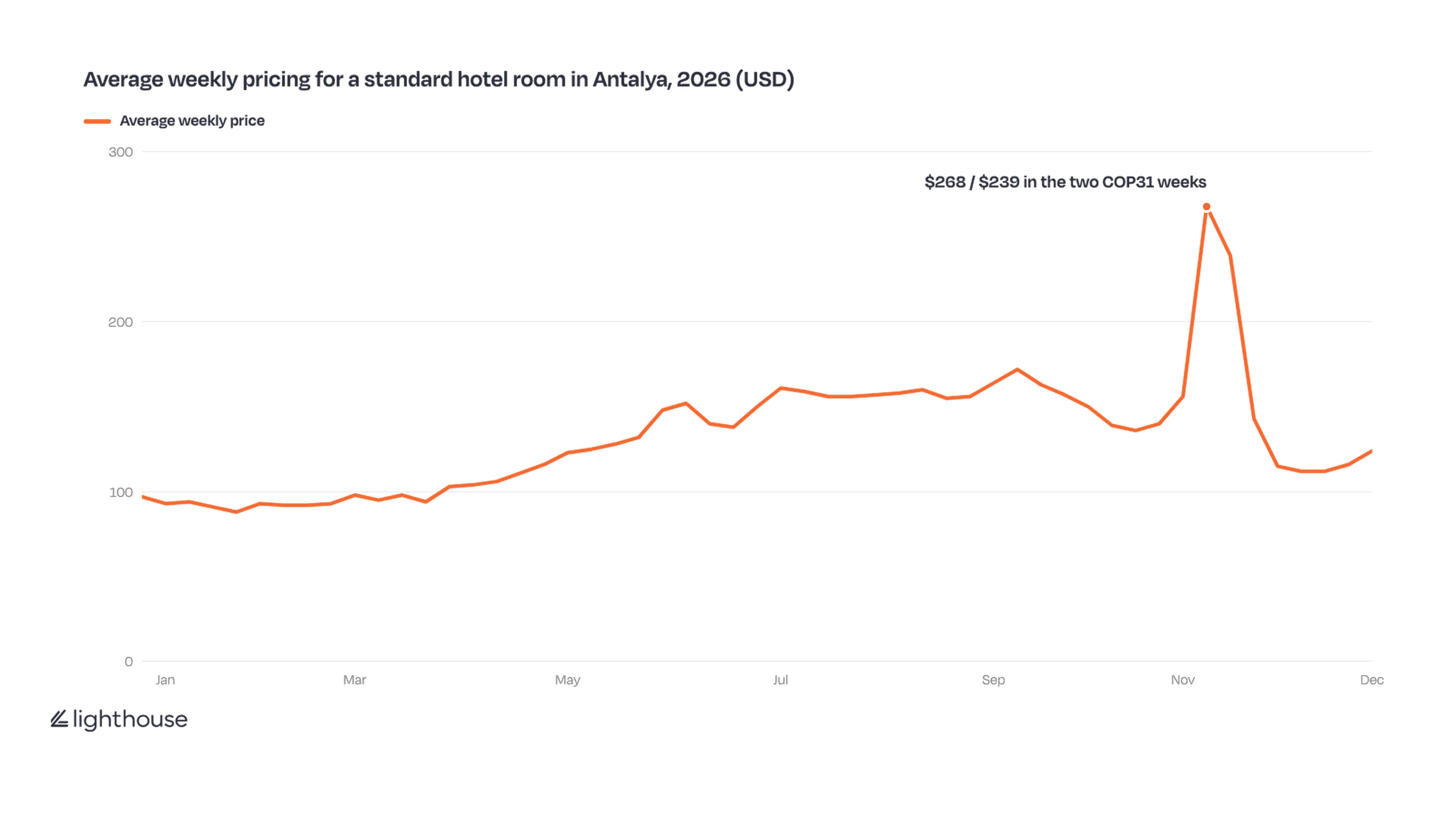
Average rates for a standard hotel room reach $268 during the opening part of the conference and remain elevated at $239 during the second week.
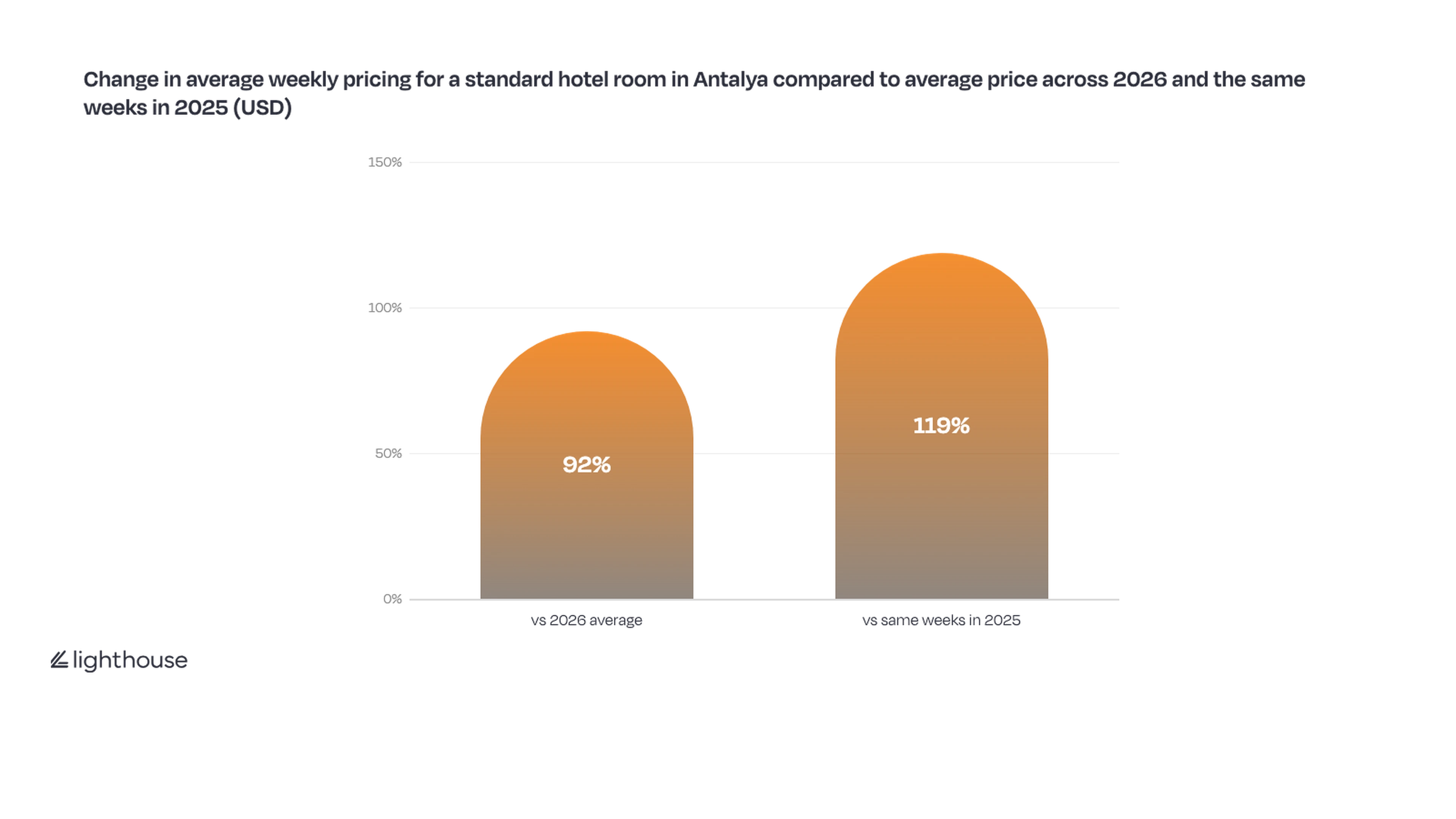
Across the two conference weeks, average rates are higher than at any other point in the year and 92% above the overall 2026 average. They are also 119% higher than during the same two weeks in 2025.
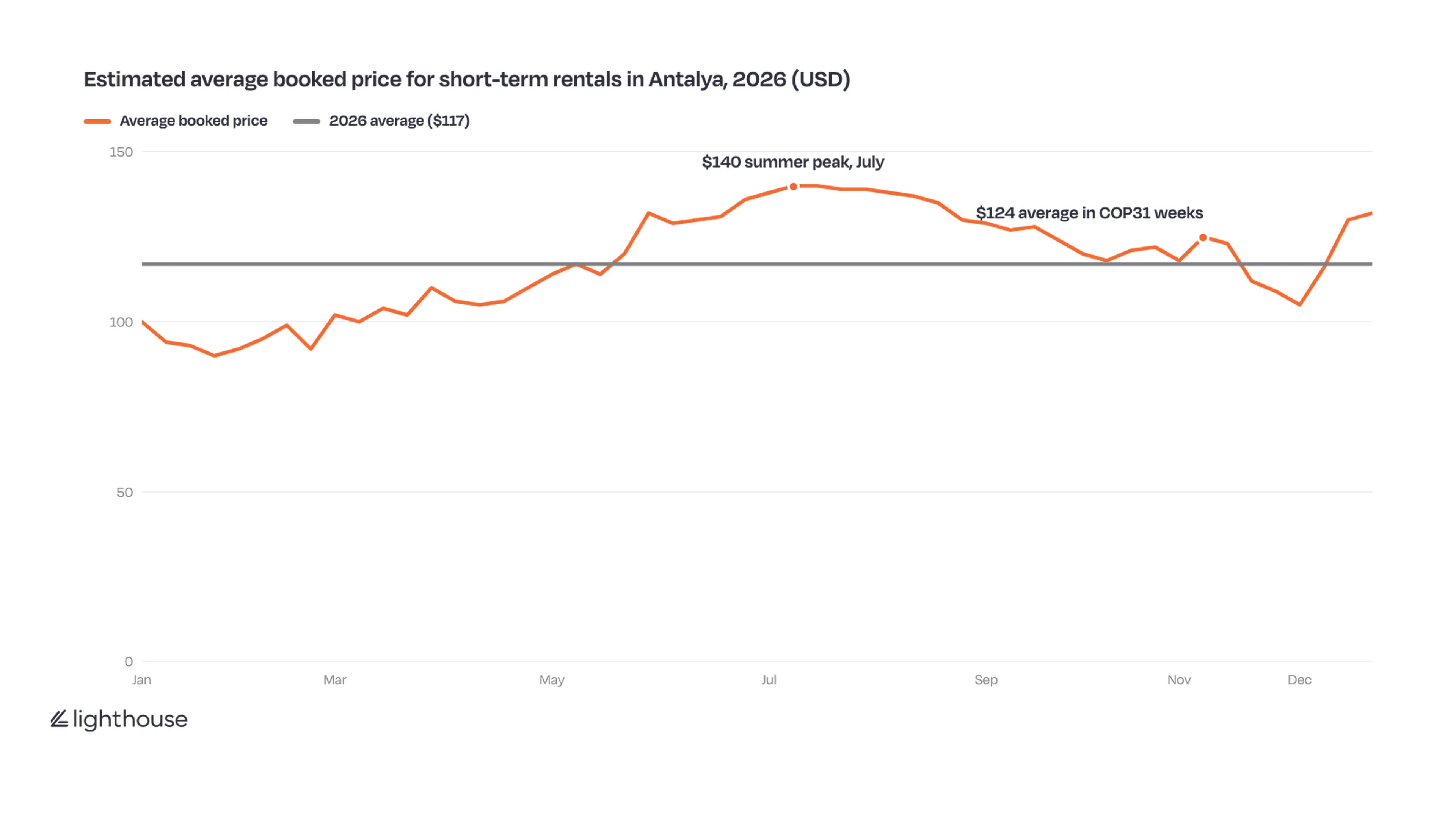
Short-term rentals show a much smaller increase. Average booked prices during the period are around $124, only $7 above the annual average and well below the summer peak.
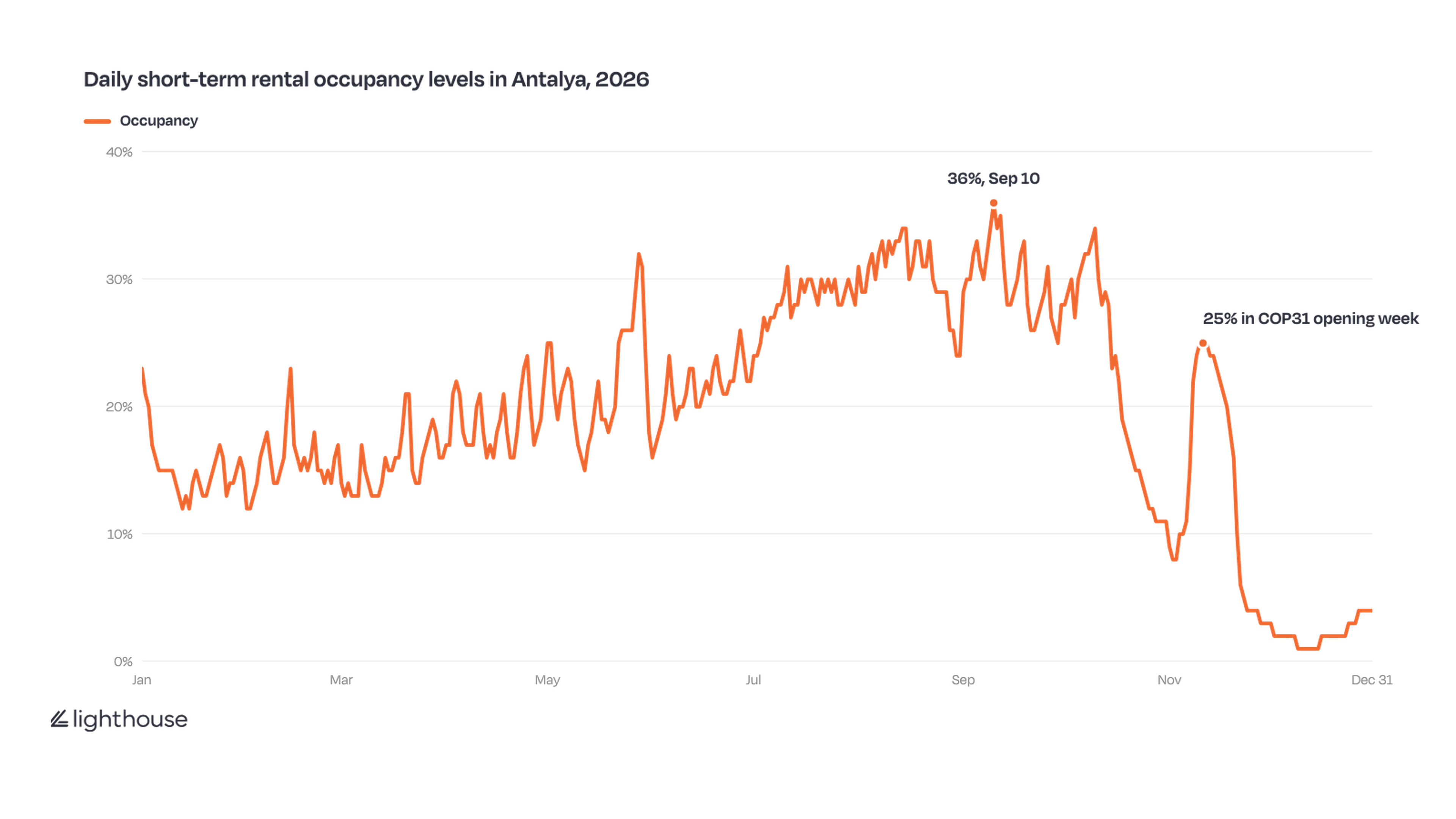
At the time of data extraction, estimated occupancy was above the normal booking curve for the time of year but remained below typical summer levels. Around a quarter of properties had been booked for the opening week of COP31, with occupancy falling noticeably during the second week.
Taken together, the pricing and occupancy data point to a hotel-led demand surge, with the strongest pricing power concentrated in higher-end properties rather than across Antalya’s accommodation market as a whole.
COP31 produces Antalya’s strongest demand of the year
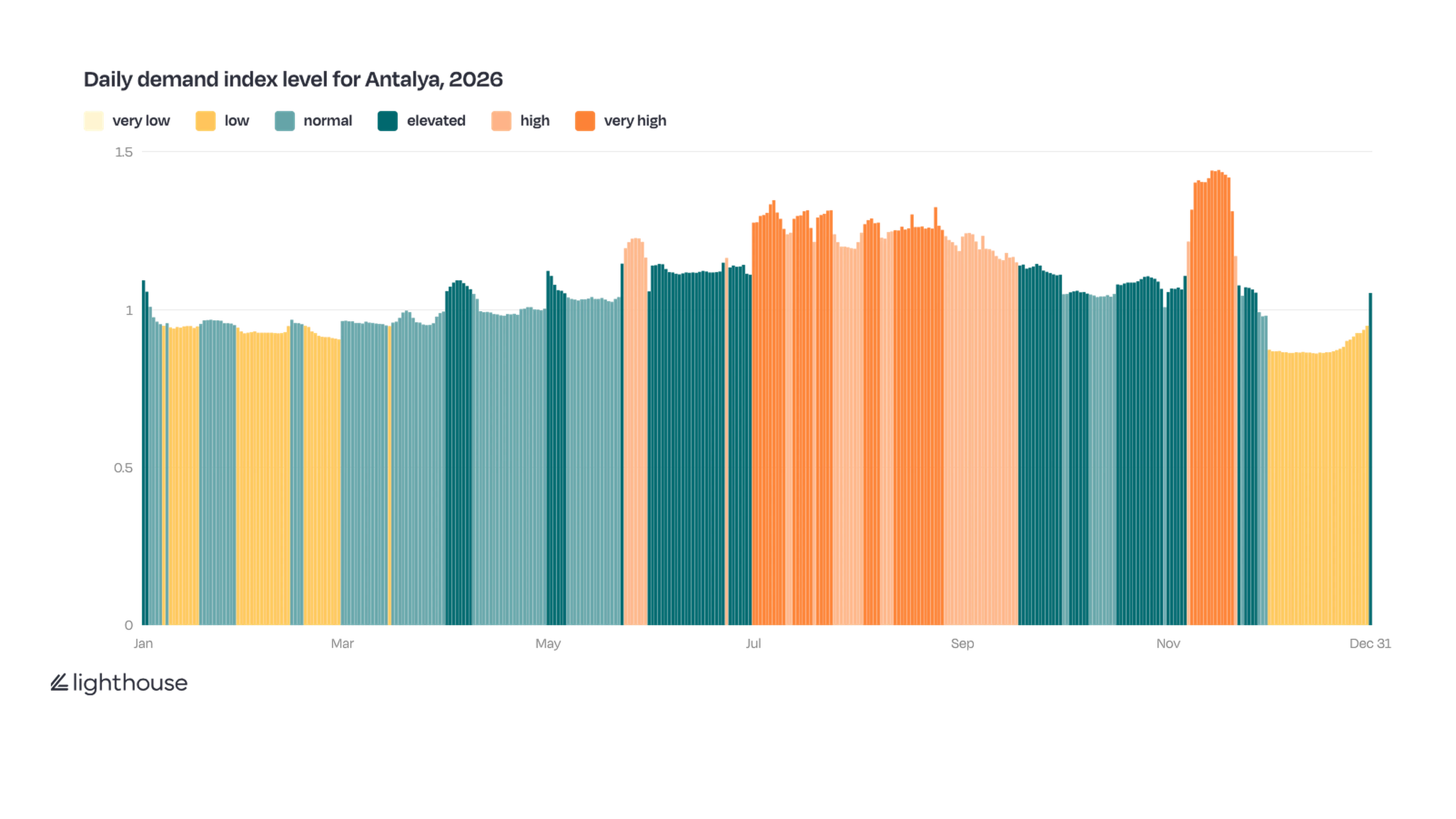
Lighthouse’s daily demand index provides a broader view of the market.
Aside from the final day of the conference, implied demand during COP31 is higher than at any other point in the year and remains at very high levels throughout most of the event.
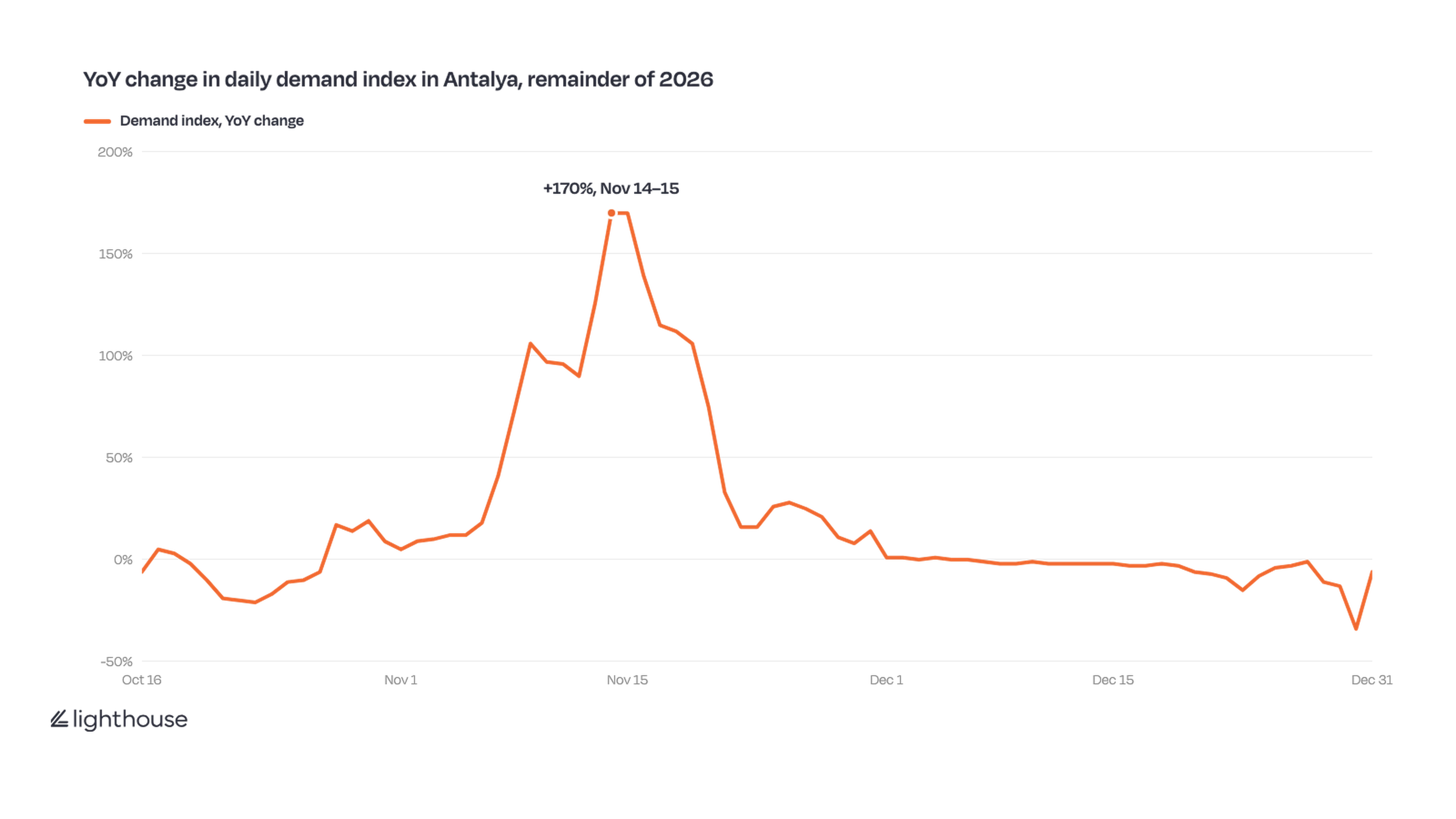
The YoY comparison is even more pronounced. Across the conference period, daily demand is on average 117% higher than on the same dates in 2025, peaking at 170% above last year on November 14 and 15.
Even those figures may not capture the complete picture.
COP31 has a dedicated accommodation platform operated by official partner Coral Travel, allowing registered participants to book directly from a large pool of selected hotels. That reduces the need for some attendees to search through other booking channels.
This may help explain why GDS hotel search activity for Antalya has been volatile rather than building steadily, with major spikes around six months and two months before the conference.
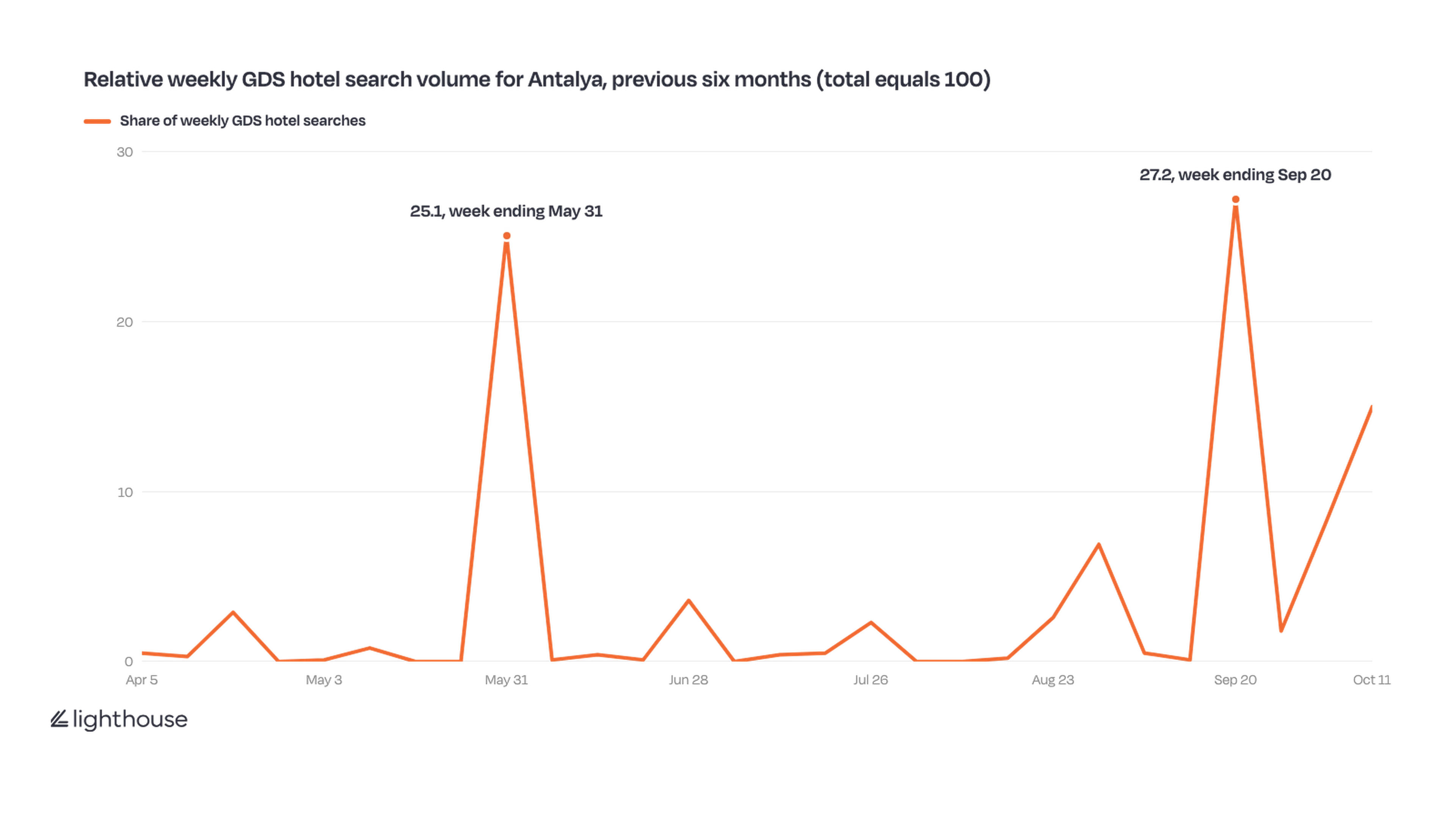
The wider picture is therefore one of exceptionally strong demand, but with a significant share concentrated in selected hotels and bookings taking place through the official event infrastructure.
Proximity tightens remaining supply
Antalya’s accommodation mix adds another dimension.
The market has a large supply of five-star resorts across the city and surrounding coastal areas, many of which feature prominently on the official COP31 accommodation platform.
At the time of writing, a search for one room within 30 km of the conference venue from November 9 to 15 returned 4,815 available rooms across 75 listings.
Five-star properties accounted for 1,921 of those rooms across 20 listings – around 40% of all remaining inventory. By contrast, only two three-star hotels appeared in the results, with seven rooms available between them.
The remaining inventory is also concentrated farther from the venue. Available properties were on average more than 20 km away, while the same search showed no availability at nearby hotels.
Properties with remaining inventory in central Antalya or close to the COP31 venue may therefore have more pricing power than the market-wide averages suggest. Scarcity could also support higher rates at well-located lower-category hotels where very little inventory remains.
That puts the final pricing opportunity at the intersection of location and hotel category. Five-star properties are capturing the largest premium overall, but well-positioned lower-category hotels may still have room to push rates as nearby supply tightens.
Lighthouse brings together forward-looking demand, hotel and short-term rental pricing, occupancy, search activity and market availability, making it easier to see where pressure is building and where pricing may still have room to move.
Ernest, Lighthouse’s AI teammate, lets commercial teams question that data, investigate the dates behind a change and create alerts or routines as conditions develop. For COP31, that means a clearer view of where rates have already moved and where there may still be room to act.

Joe Hanly

Joe Hanly
Joe Hanly is a writer and content creator at Lighthouse, helping hoteliers navigate industry trends with clear, engaging storytelling. He believes the best insights come from real experiences – that’s why when he’s not writing about travel and hospitality, he’s out exploring it firsthand. It’s all research. Sort of.