APEC sends Shenzhen hotel demand to an annual high
Hotel rates rise 57% YoY across the two conference weeks, with five-star properties seeing stronger growth than the market average
Shenzhen’s hotel market has had a subdued 2026, but APEC is creating a clear break from that pattern.
Lighthouse data shows demand building sharply ahead of APEC Economic Leaders’ Week, with demand more than double 2025 levels on the main conference dates and hotel rates rising with it.
The political stakes are high too. Xi Jinping will chair the APEC Economic Leaders’ Meeting on November 18 and 19, Donald Trump is expected to attend, and Vladimir Putin previously accepted an invitation to the summit. Trade and economic relations between the US and China are likely to be a major focus.
APEC breaks Shenzhen’s subdued demand pattern
China’s hotel market has struggled to build momentum in 2026, with pressure on nominal room rates and limited demand growth.
Shenzhen follows that pattern in Lighthouse data. Average prices for a standard hotel room across 2026 are down 2%, or about 5% when the two APEC weeks are excluded, while demand indicators are broadly flat across the year.
APEC changes that picture sharply.
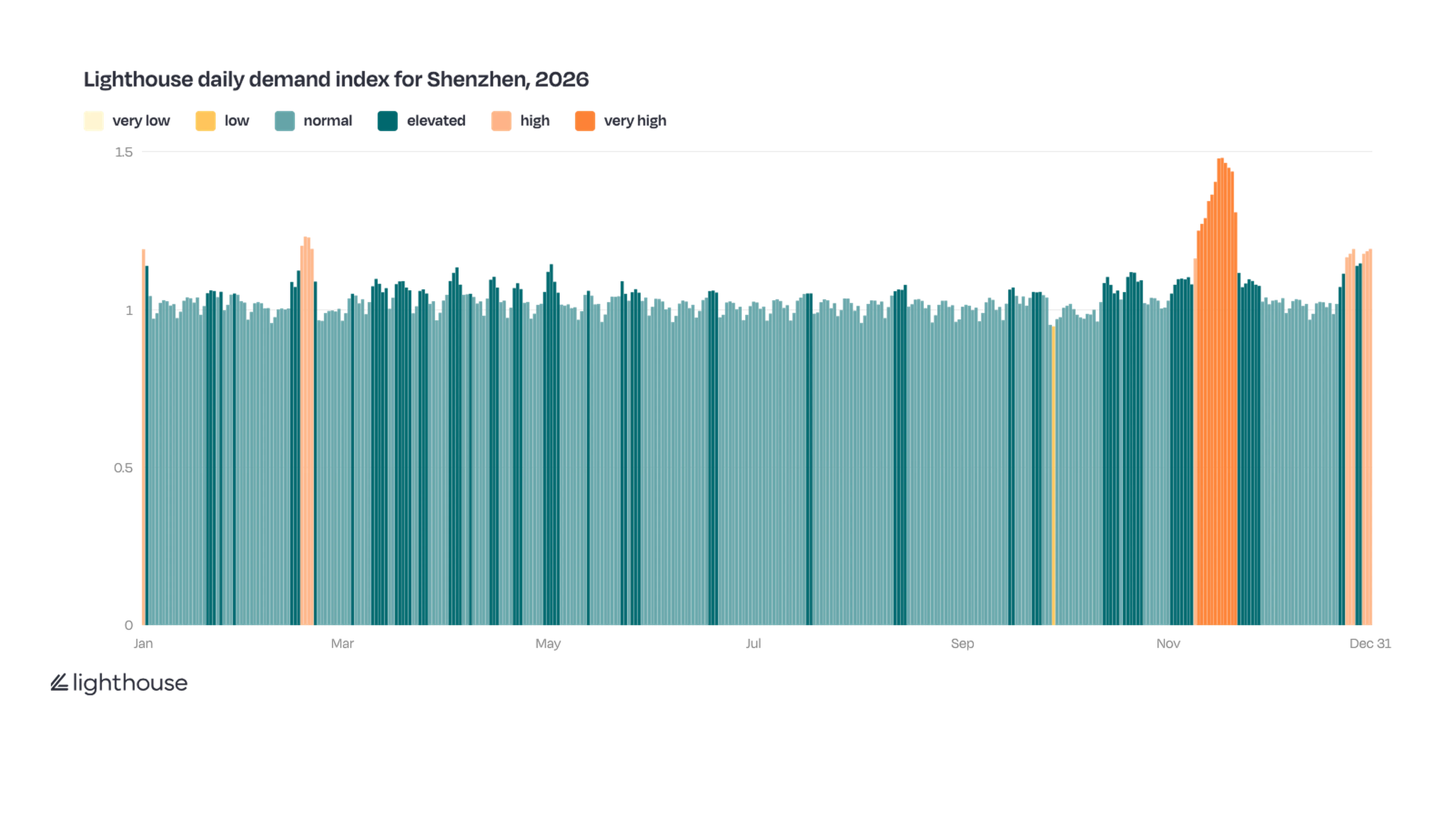
Lighthouse’s daily demand index rises rapidly from November 9 through November 21, producing both the highest and most sustained demand period of the year. The index peaks on November 17, the day before the APEC Economic Leaders’ Meeting begins.
Twelve days of this 13-day period are rated very high relative to normal demand. The peak is also considerably higher than during the Lunar New Year holidays, while the elevated period lasts much longer than the five-day uplift recorded around those public holidays.
The YoY comparison makes the scale of the increase clearer.
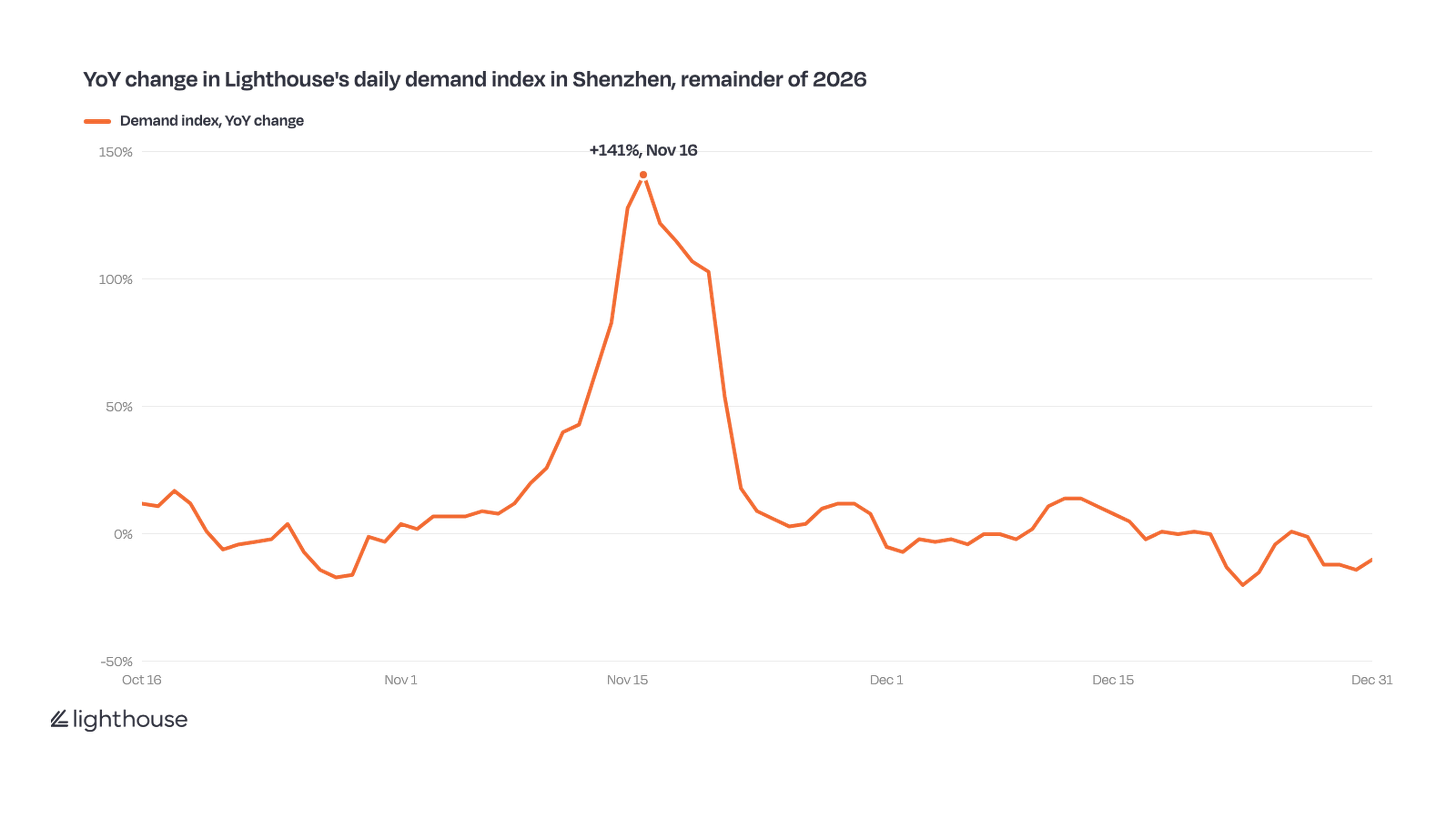
Lighthouse’s daily demand index combines hotel search activity with other demand indicators. From November 15 to 20, demand is more than twice as high as on the same dates in 2025.
The largest YoY increase comes on November 16 at 141%. Demand on November 17, 18 and 19 is 122%, 115% and 107% above 2025 levels, respectively.
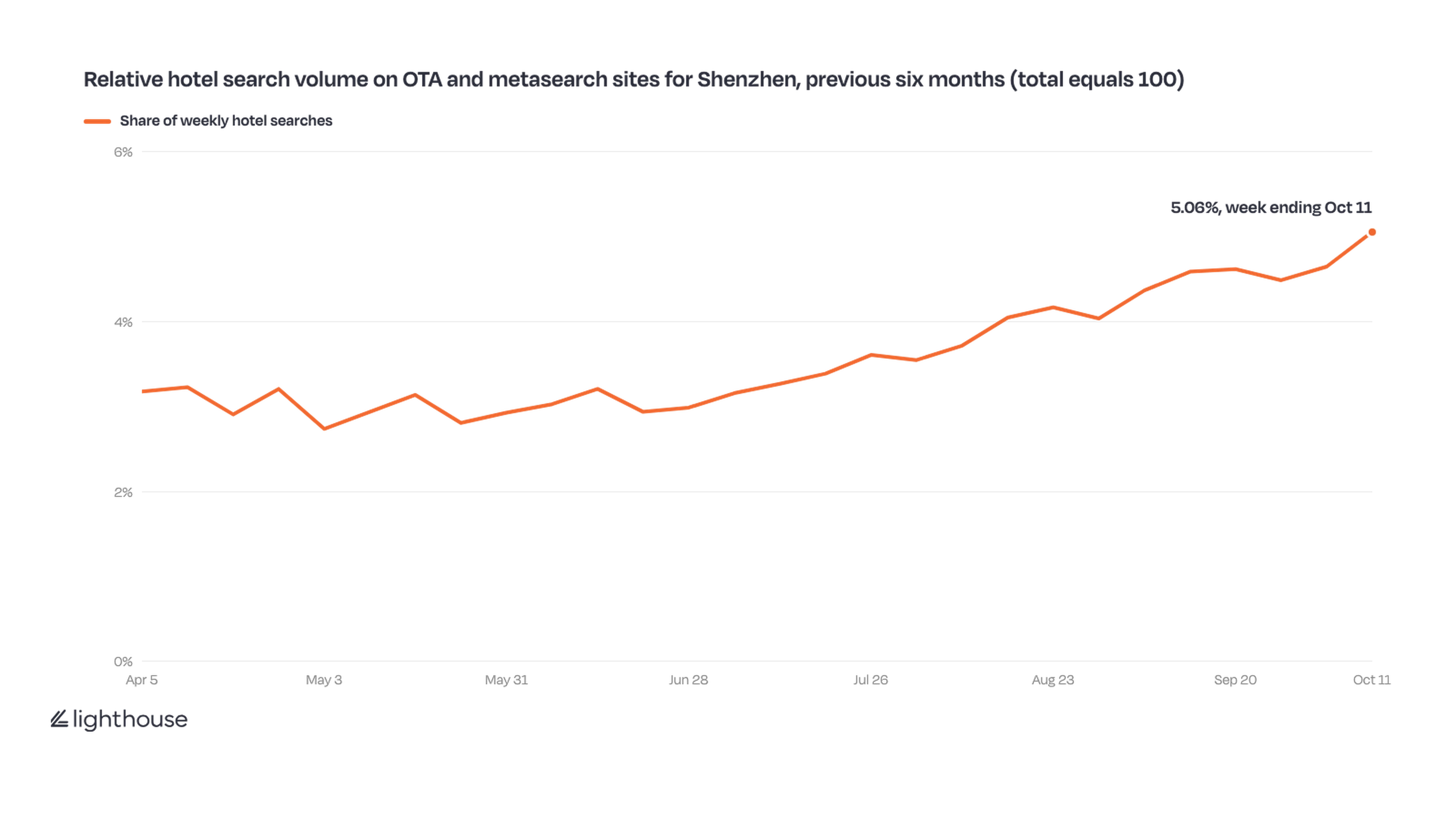
Hotel search activity on OTA and metasearch sites shows a similar build-up.
Of all searches recorded over the previous six months, 44% occurred in the most recent 10 weeks. Nearly a quarter of the six-month total came in the latest five weeks alone.
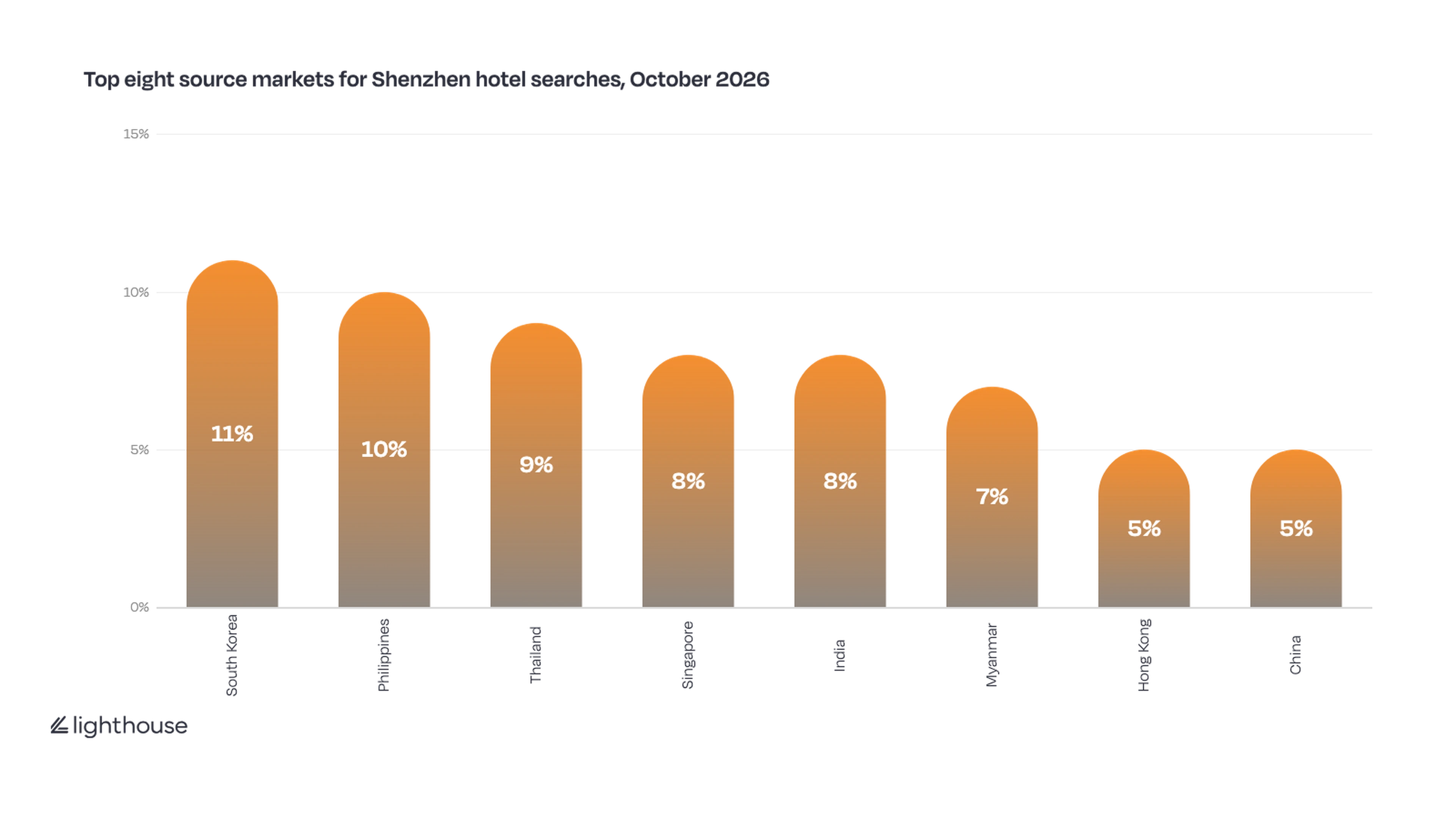
October search data also shows a broad regional feeder base.
Among the top eight source markets for Shenzhen hotel searches, six Asian markets rank ahead of mainland China and Hong Kong. South Korea accounts for the largest share at 11%, followed by the Philippines at 10%.
APEC pushes Shenzhen hotel rates to an annual high
The demand surge is already feeding through to pricing.
At the time of writing, a standard hotel room in Shenzhen averages RMB 1,712 for the week starting November 16 and RMB 1,457 for the previous week starting November 9.
The earlier week includes several important lead-in meetings, including the APEC Business Advisory Council meeting from November 14 to 16, before the CEO Summit and Economic Leaders’ Meeting the following week.
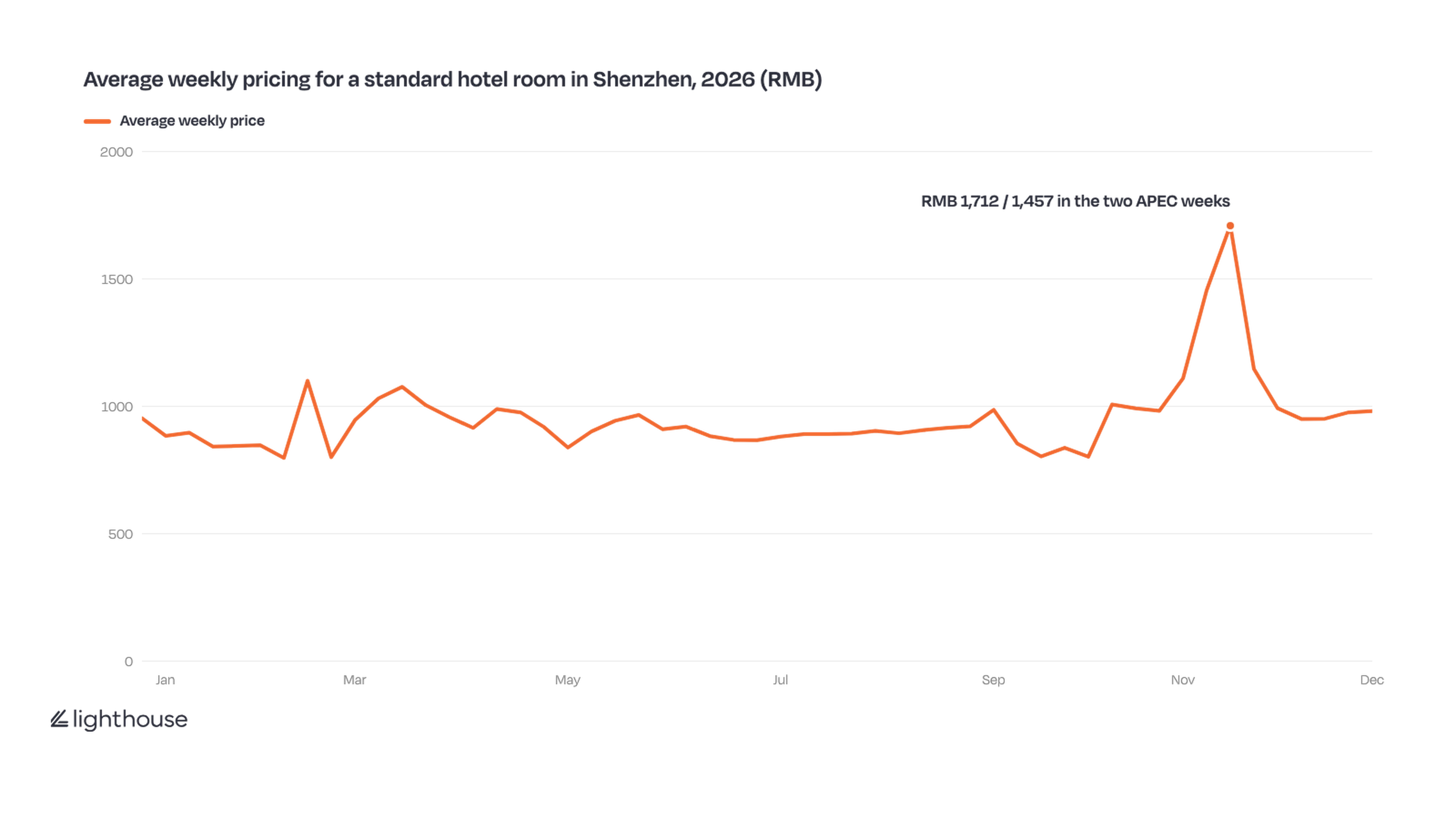
The RMB 1,712 peak is 77% higher than the same week in 2025 and 79% above the average advertised and actualized rate across 2026.
Averaged across the two APEC weeks, rates are up 57% YoY.
Over the key November 9–22 period, Lighthouse’s daily demand index is up an average of 76% YoY. Hotel pricing has therefore moved strongly with demand, although rate growth remains below the increase recorded in the demand index.
Lighthouse’s segmented pricing data also shows stronger growth in the five-star category than the market average during APEC. Higher-end hotels appear to be benefiting more from the influx of senior officials, delegates and business travelers.
That gap is where the commercial question becomes more interesting. Hotels need to know not just that demand is rising, but which dates are tightening fastest, how competitors are reacting and whether their own rates are keeping pace.
Lighthouse brings those questions into one view, using forward-looking demand, hotel search activity, pricing and competitive data to show how the market is developing around APEC.
Ernest, Lighthouse’s AI teammate, can then be used to dig into specific dates, rate movements and competitor behavior, or to keep watch on changes as they happen. For Shenzhen hotels, that creates a clearer picture of where pricing may still be lagging behind the strength of demand.

Joe Hanly

Joe Hanly
Joe Hanly is a writer and content creator at Lighthouse, helping hoteliers navigate industry trends with clear, engaging storytelling. He believes the best insights come from real experiences – that’s why when he’s not writing about travel and hospitality, he’s out exploring it firsthand. It’s all research. Sort of.